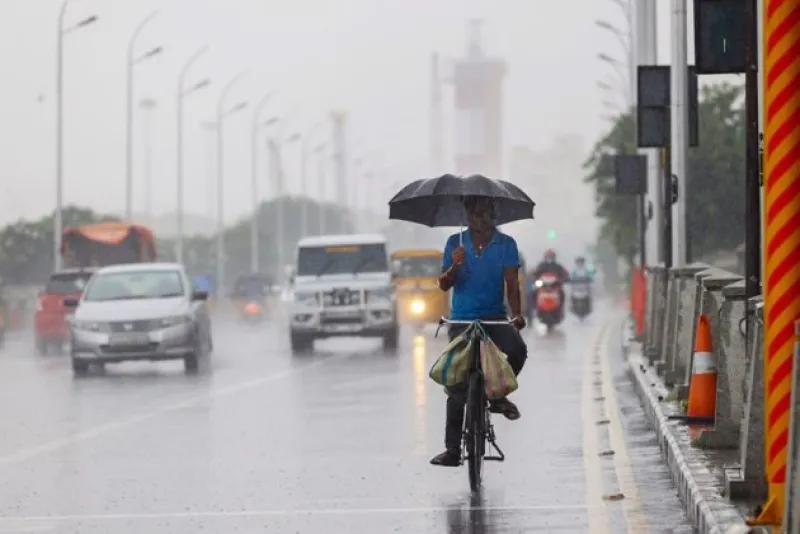
In a massive technological upgrade to India's agricultural and disaster management framework, the India Meteorological Department (IMD), alongside the Ministry of Earth Sciences, officially launched two cutting-edge Artificial Intelligence (AI) and Machine Learning (ML)-based weather forecasting tools.
Moving away from broad, regional climate projections, this initiative introduces hyperlocal, high-resolution predictive data tailored precisely for rain-fed agricultural zones. Jointly developed by the IMD, the Indian Institute of Tropical Meteorology (IITM, Pune), and the National Centre for Medium Range Weather Forecasting (NCMRWF), these systems represent a pivotal transition from conventional statistical weather metrics to real-time, actionable decision-support systems.
The Technology Behind the Precision
Traditional forecasting models often struggle with "downscaling"—the ability to translate massive global atmospheric data into what will actually happen over a specific village or farm.
The new system bridges this gap using AI-driven downscaling techniques. It ingests and cross-analyzes real-time streams from an interconnected observational network:
Automatic Rain Gauges (ARGs) and Automatic Weather Stations (AWSs) providing ground-level data.
Doppler Weather Radars tracking active cloud dynamics and precipitation intensity.
High-resolution satellite-based rainfall datasets calculating moisture movement.