
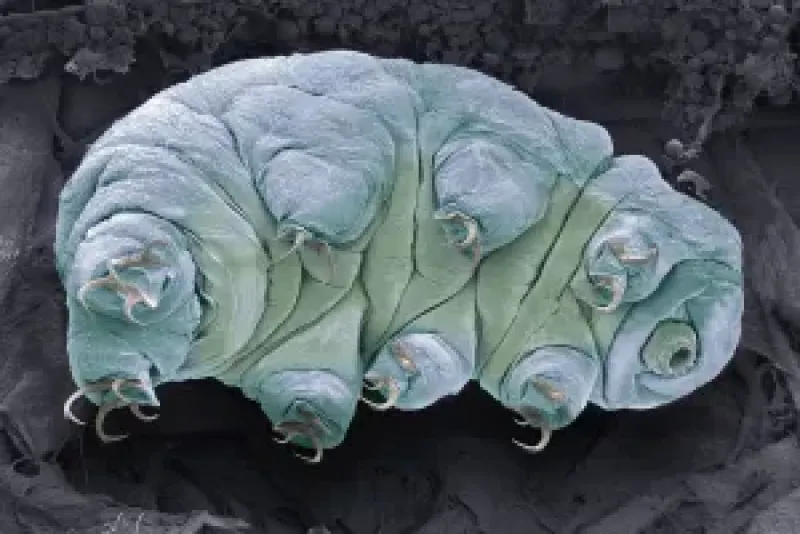
In a major boost to India's marine biodiversity documentation, researchers have discovered a completely new species of tardigrade—commonly referred to as a "water bear"—in the shallow marine substrate off the northeast coast of India. The microscopic organism was isolated from sand samples collected near the coastal pocket of Markandi in Ganjam district, Odisha.
A Nod to Indian Classical HeritageThe newly identified organism has been officially named Actinarctus odissi, a deliberate tribute to Odisha's classical dance form, Odissi. Tardigrades are renowned in evolutionary biology for their extreme cryptobiosis—the ability to survive extreme environmental radiation, vacuum conditions, and absolute zero temperatures by suspending their metabolic processes.
This discovery marks the first time in 43 years that a new member has been added to the marine-dwelling Actinarctus genus anywhere globally. The extraction and taxonomic identification were completed using advanced scanning electron microscopy, highlighting a rich, under-explored micro-invertebrate ecosystem along the Bay of Bengal coastline.