
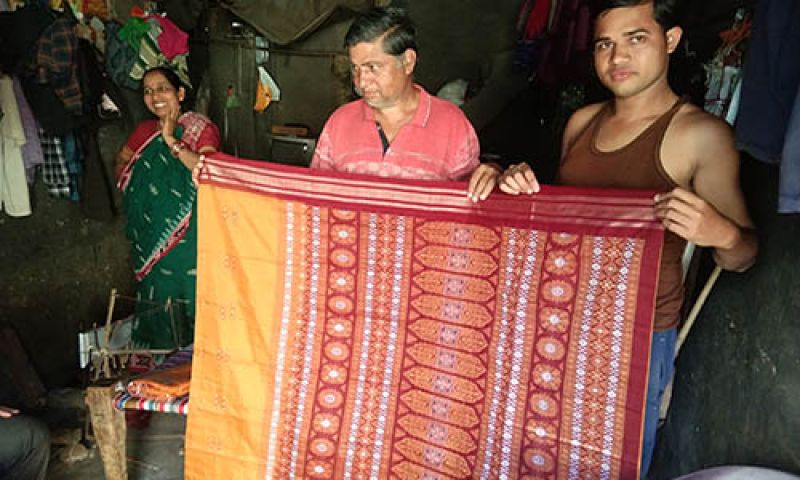
While the Bomkai saree is widely recognized across India, its authentic, original coarse cotton form—native to Bomkai village in Ganjam district—is currently facing severe extinction. With youth migrating to other states for better prospects, only two traditional weaving families (led by Keshab Nayak and Sushanta Kumar Nayak) currently practice the authentic craft in its birthplace. To prevent the loss of this Geographical Indication (GI) tagged heritage, the Odisha government has officially rolled out the "Revival of Languishing Products (Cotton Bomkai Saree)" project. Executed in coordination with the State Agency for Development of Handloom Clusters, the initiative focuses on two primary pillars:
Documentation: Systematically recording the original geometrical motifs, vivid color specifications, and the signature phoda kumbha (temple spire) borders before they are lost or diluted by machine-made replicas.
Skill Transfer: Conducting rigorous orientation and training programs to pass down the labor-intensive extra-weft pit loom techniques to a new generation of artisans from surrounding villages.This administrative intervention is critical not just for cultural preservation, but also serves as an important topic for state exams concerning rural livelihood schemes, GI tags, and traditional handlooms.